Chapter 14: Guidance for Institutions

overview

Chapter 14: Guidance for Institutions

Chapter 14 provides guidance for institutions responsible for overseeing SEAs in national energy transition plans, especially in moving away from fossil fuels to renewable energy.

Strategic Environmental Assessments (SEAs) are essential when planning how to transition from fossil fuels to renewable energy. They ensure that environmental and social impacts are carefully considered throughout the process of developing and implementing polices, plans, and programs (PPPs) concerned with the energy transition.

This chapter provides guidance for the steps that need to be taken (e.g., preparing terms of reference, appointing experts) and the issues that must be considered when planning or undertaking an SEA –by governments, funding agencies and renewable energy developers – and discusses the need for stakeholder engagement through the SEA process.

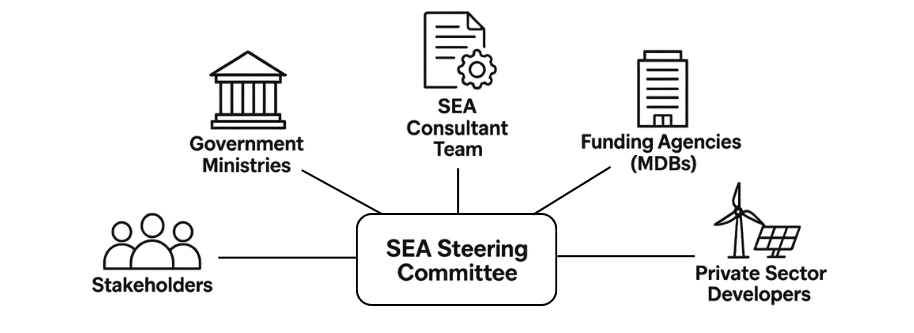
Table of Contents

14.1  A Simple Introduction to SEA

14.2  All Institutions

14.3  Government Institutions

14.4  Funding Agencies

14.5  Renewable Energy Developers

14.6  Stakeholder Engagement

Download Chapter 14

Access the full chapter as a PDF download.

Related Resources

Find relevant checklists, forms, case studies, and more in the Annexes.

Dig Deeper

Have questions? Our AI-powered SEA Guidance document expert is here to help.

Executive Summary

What is Strategic Environmental Assessment (SEA)?

Strategic Environmental Assessment (SEA) is a process used to assess the environmental and social implications of policies, plans, and programs before decisions are made. Because the energy transition spans multiple ministries, sectors, and levels of government, effective institutional coordination is critical for an SEA to be useful and influential.

For a more complete introduction to SEA, explore Chapter 1: Background to SEA and Chapter 2: Stages and Tasks in SEA

How can SEA help institutions responsible for preparing SEAs?

One important step is setting up a Steering Committee early on to bring together government officials, private companies, investors, and other key groups. This committee provides oversight of an SEA and helps manage the different interests involved in the energy transition. It also makes sure the SEA is aligned with decision-making processes and addresses political and economic interests.

The role of government institutions in SEA implementation is key, ensuring all relevant ministries are involved. This is important because the energy transition affects areas like the environment, health, transportation, and jobs. SEAs should also guide future project-specific assessments to ensure environmental and social issues are addressed in individual renewable energy projects.

Funding agencies should make sure the SEA complies with national legal and regulatory requirements, has enough funding, and involves proper consultation.

Private sector renewable energy developers are not directly involved in the SEA process, but they should be encouraged take part in discussions to understand how SEA decisions might impact their planned and anticipated projects.

Stakeholders

It is crucial to involve all stakeholders, from national to local levels, to ensure that everyone’s concerns are heard and considered.

Project-level EIAs

SEAs should also guide future project-specific assessments to ensure environmental and social issues are addressed for individual renewable energy projects.

Institutional ROles

Who does what in SEA?

Institutional ROles

Who does what in SEA?